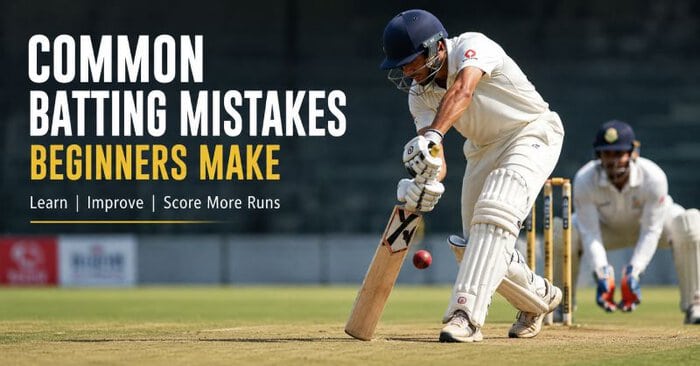
A Complete Guide to Improving Your Batting Technique and Scoring More Runs
Every successful cricketer, from local club players to international stars, has made mistakes while learning to bat. No one walks onto a cricket field with perfect technique. The difference between an average batter and a successful one is not that they never make mistakes; it’s that they identify them early and work consistently to correct them.
If you’re just starting your cricket journey, you’ll probably experience dismissals that leave you frustrated. You might get bowled while trying to hit across the line, edge the ball because of poor footwork, or miss easy scoring opportunities because you panic under pressure.
The good news is that most batting mistakes are completely fixable with the right guidance and regular practice.
In this article, we’ll discuss the most common batting mistakes beginners make, explain why they happen, and share practical coaching tips to help you improve. Whether you play leather ball cricket, tennis ball cricket, school cricket, or club cricket, these lessons will help you become a more confident and consistent batter.
Quick Answer
Most beginner batters struggle because they focus only on hitting the ball instead of building a solid batting foundation. How to hold a bat correctly, incorrect stance, weak footwork, playing across the line, rushing shots, and ignoring running between the wickets are some of the biggest reasons why beginners lose their wickets.
Correcting these basic mistakes early can significantly improve your batting consistency and confidence.
Common Batting Mistakes at a Glance
| Batting Mistake | How It Affects Your Game | Simple Solution |
|---|---|---|
| Incorrect Bat Grip | Poor bat control and mistimed shots | Learn the proper V-shaped grip |
| Poor Batting Stance | Loss of balance | Maintain a relaxed and balanced stance |
| Watching the Bowler Instead of the Ball | Missed timing and edges | Keep your eyes on the ball from release to contact |
| Weak Footwork | Difficulty against pace and spin | Move your feet before playing the shot |
| Playing Across the Line | Higher chance of getting bowled or LBW | Play straight whenever possible |
| Trying to Hit Every Ball Hard | Unnecessary dismissals | Build your innings patiently |
| Ignoring Strike Rotation | Pressure from dot balls | Look for easy singles and twos |
| Poor Shot Selection | Risky dismissals | Choose shots based on the delivery |
| Panic Under Pressure | Poor decision-making | Stay calm and trust your technique |
| Lack of Match Practice | Slow improvement | Practice regularly in match situations |
Why Beginners Make Batting Mistakes
Learning to bat is about much more than swinging a cricket bat. A batter must develop:
- Proper technique
- Match awareness
- Shot selection
- Footwork
- Confidence
- Patience
- Fitness
Many beginners focus only on boundaries because that’s what they see on television. However, experienced batters know that scoring runs consistently is about making smart decisions rather than playing spectacular shots.
As a coach would often say:
“A beautiful cover drive means nothing if you lose your wicket trying to play it at the wrong ball.”
Mistake #1: Holding the Bat Incorrectly
The grip is the foundation of every batting shot.
Many beginners grip the handle too tightly or place both hands incorrectly, making it difficult to control the bat.
Why This Happens
- Copying friends instead of learning proper technique
- Trying to generate power by squeezing the handle
- Lack of coaching during the early stages
How It Affects Your Batting
A poor grip can lead to:
- Mistimed shots
- Reduced bat speed
- Difficulty playing straight
- Less control against fast bowlers
How to Fix It
Use the classic V-grip, where the “V” formed by your thumb and index finger points down the back of the bat handle.
Keep your grip firm enough to control the bat but relaxed enough to allow free movement.
Coach’s Tip
A relaxed grip improves timing. The harder you squeeze the handle, the harder it becomes to play fluent cricket shots.
Mistake #2: Standing in the Wrong Batting Stance
Your stance is your starting position. If it’s incorrect, every movement that follows becomes more difficult.
Common Problems
- Standing too upright
- Leaning too far forward
- Feet too close together
- Feet too wide apart
- Locked knees
Why It’s a Problem
Poor balance affects:
- Footwork
- Shot execution
- Reaction time
- Stability against fast bowling
Correct Technique
A good batting stance should be:
- Balanced
- Relaxed
- Comfortable
- Slightly side-on
- Eyes level
Your weight should be evenly distributed on both feet, allowing you to move quickly in any direction.
Real Match Example
Watch experienced batters during international matches. Before every delivery, they settle into a balanced stance that allows them to react naturally to different lengths and lines.
Mistake #3: Looking Up Too Early
This is one of the biggest reasons beginners miss the ball.
Many players become eager to see where the ball is going before they’ve actually completed the shot.
What Happens?
Instead of watching the ball until it meets the bat, they lift their head early.
This often results in:
- Edges
- Missed shots
- Poor timing
- Being bowled
How to Fix It
Train yourself to watch the ball from the bowler’s hand until after it makes contact with the bat.
Practice Drill
Ask a teammate to throw underarm deliveries while you focus only on keeping your head still and eyes fixed on the ball throughout the shot.
Mistake #4: Poor Footwork
Good footwork is one of the biggest differences between beginner and advanced batters.
Many new players stay rooted to the crease and rely only on their hands.
Why It’s a Problem
Without proper foot movement:
- Fast bowlers can trap you on the crease.
- Spin bowlers can deceive you with flight and turn.
- You struggle to get into the correct position for your shots.
How to Improve
Move your front foot toward full deliveries.
Move your back foot quickly against short deliveries.
Against spin, don’t be afraid to use your feet to get closer to the pitch of the ball.
Coach’s Advice
Remember this simple rule:
Your feet should move before your bat does.
Mistake #5: Trying to Hit Every Ball for a Boundary
This is probably the most common mistake among young cricketers.
After watching T20 cricket, many beginners believe every delivery should be hit for four or six.
In reality, even the world’s best batters spend much of their innings rotating the strike and waiting for loose deliveries.
Why It’s Dangerous
Trying to attack every ball increases the chances of:
- Caught in the deep
- Bowled
- LBW
- Mistimed shots
Better Approach
Respect good deliveries.
Attack bad deliveries.
Rotate the strike whenever possible.
Remember:
A well-constructed innings is built one run at a time, not one boundary at a time.
Absolutely. Below is the remaining content that continues seamlessly from Part 1. This completes the article into a comprehensive, EEAT-friendly, reader-first guide designed to outperform typical competitor pages.
Mistake #6: Playing Across the Line Too Often
One of the quickest ways for beginners to lose their wicket is by playing across the line instead of playing straight.
Many players try to hit the ball toward the leg side regardless of where it is pitched. While this may work occasionally in tennis ball cricket, it becomes risky in leather ball cricket.
Why It Happens
- Trying to hit every ball for boundaries.
- Lack of confidence in front-foot drives.
- Copying aggressive shots seen in T20 matches.
Problems It Creates
- Higher chance of getting LBW.
- Increased risk of being bowled.
- Mistimed shots leading to catches.
How to Fix It
Play according to the line of the ball.
If the ball is outside off stump, play through cover or point.
If the ball is straight, play with a straight bat.
Reserve cross-batted shots like the pull and sweep for the right deliveries.
Coach’s Tip
Straight bat = safer batting.
Master straight drives before attempting risky cross-batted shots.
Mistake #7: Poor Shot Selection
Even technically sound batters get out if they choose the wrong shot.
The difference between a good batter and an average one is often in decision-making.
Examples of Poor Shot Selection
- Driving a swinging ball.
- Pulling a ball that isn’t short enough.
- Sweeping on a turning pitch without judging the length.
- Attempting lofted shots immediately after arriving at the crease.
Better Approach
Ask yourself:
- Is this ball worth attacking?
- Am I balanced?
- Can I score safely instead?
Real Match Example
Imagine you’re batting on a green pitch where the ball is swinging. Instead of attempting flashy cover drives early, leave the ball outside off stump and wait until you are settled. Patience often leads to bigger scores.
Mistake #8: Ignoring Strike Rotation
Many beginners either defend every ball or try to hit boundaries.
They forget the easiest scoring option – taking singles.
Great batters constantly rotate the strike.
Why It Matters
Strike rotation:
- Keeps the scoreboard moving.
- Builds partnerships.
- Prevents bowlers from settling into a rhythm.
- Forces captains to change field placements.
How to Improve
- Learn to identify gaps before every delivery.
- Practice soft hands.
- Improve communication with your batting partner.
- Turn one run into two whenever possible.
Expert Insight: Six singles score the same six runs as one six but with far less risk.
Mistake #9: Poor Running Between the Wickets
Many wickets are lost without the fielding side making an exceptional effort.
The problem is poor communication between batters.
Common Errors
- Hesitating halfway down the pitch.
- Calling too late.
- Watching the ball instead of running.
- Not backing up properly.
How to Fix It
Use clear calls:
- “Yes!”
- “No!”
- “Wait!”
Always run the first run hard.
Good running can turn average innings into match-winning knocks.
Mistake #10: Fear of Fast Bowling
Almost every beginner feels nervous facing genuine pace.
The mistake isn’t being afraid; it’s allowing that fear to affect your technique.
Signs of Fear
- Closing your eyes.
- Falling away while playing.
- Backing away from the stumps.
- Swinging wildly.
How to Build Confidence
Start with:
- Tennis ball practice.
- Side-arm throwdowns.
- Bowling machine sessions.
- Gradually increasing bowling speed.
Coach’s Advice
Confidence grows through exposure.
The more quality balls you face in practice, the calmer you’ll become in matches.
Mistake #11: Not Reading the Bowler
Good batters don’t just watch the ball; they study the bowler.
Observe:
- Release point.
- Wrist position.
- Bowling rhythm.
- Field placement.
These clues help you predict what might come next.
For example:
If the captain suddenly places a deep square leg, the bowler may be planning a short-ball attack.
Mistake #12: Losing Concentration
Batting isn’t only about technique.
It’s equally about concentration.
Many beginners lose focus after:
- Playing a good shot.
- Facing several dot balls.
- Hearing comments from fielders.
- Thinking about the scoreboard.
Stay Present
Treat every delivery as a new challenge.
Forget the previous ball.
Focus only on the next one.
Mistake #13: Overconfidence After Scoring Runs
Scoring a few boundaries can sometimes create a false sense of security.
Many dismissals happen immediately after a batter reaches:
- 20 runs
- 30 runs
- 50 runs
Why?
Because they begin taking unnecessary risks.
Professional Habit
The best players reset mentally after every over.
Every new delivery deserves respect.
Mistake #14: Skipping Match Practice
Net sessions are important.
But matches teach lessons that practice cannot.
Only in real matches do you experience:
- Pressure.
- Different field settings.
- Changing conditions.
- Match awareness.
Play as many competitive matches as possible.
Experience is the best teacher.
Mistake #15: Neglecting Fitness
Batting is physically demanding.
Poor fitness affects:
- Footwork.
- Running between wickets.
- Concentration.
- Recovery.
Simple improvements like sprint training, core strength, flexibility, and endurance can significantly improve your batting performance.
Practice Drills to Correct These Mistakes
1. Front Foot Drill
Practice stepping towards full deliveries while maintaining balance.
2. Soft Hands Drill
Have a partner throw underarm balls while you guide them into gaps rather than hitting hard.
3. Gap-Hitting Drill
Place cones around the field and practice placing the ball into different scoring areas.
4. Running Between Wickets Drill
Practice:
- Calling loudly.
- Quick turning.
- Completing two runs repeatedly.
5. Throwdown Sessions
Use throwdowns to improve timing, shot selection, and confidence.
Expert Batting Tips
- Respect the first few deliveries.
- Build your innings gradually.
- Watch the ball until it hits the bat.
- Trust your technique under pressure.
- Rotate the strike regularly.
- Learn from every dismissal.
- Practice with purpose, not just repetition.
- Focus on consistency rather than flashy shots.
Frequently Asked Questions
Q.1 What is the biggest batting mistake beginners make?
Trying to hit every ball for a boundary instead of building an innings patiently.
Q.2 How can I improve my batting quickly?
Work on your grip, stance, footwork, shot selection, and running between the wickets. Regular match practice and focused drills will help you improve faster than simply spending more time in the nets.
Q.3 Why do beginners get bowled so often?
Many beginners play across the line, have poor footwork, or fail to judge the line and length of the delivery. Playing with a straight bat and moving your feet early can reduce these dismissal
Q4. Is technique more important than power?
Yes. A good technique allows you to score consistently against all types of bowlers. Power becomes more effective once you have a solid technical foundation.
Q5. How often should beginners practice batting?
Aim for at least 3-4 focused practice sessions per week, including net sessions, match simulation drills, and competitive games whenever possible.
Final Thoughts
Every accomplished batter has experienced frustration, poor scores, and technical flaws during the early stages of their cricket journey. The key difference is that they treated every mistake as a learning opportunity.
If you’re serious about improving, don’t chase perfection overnight. Instead, focus on correcting one mistake at a time. Master your grip, build a balanced stance, improve your footwork, and learn to value singles as much as boundaries. These habits may seem small, but together they create the foundation of every successful innings.
Remember, great batters aren’t made by avoiding mistakes, they’re made by learning from them. The next time you walk out to bat, stay patient, trust your preparation, and enjoy the challenge. Consistent improvement comes from smart practice, disciplined thinking, and a willingness to keep learning.
Leave a Reply