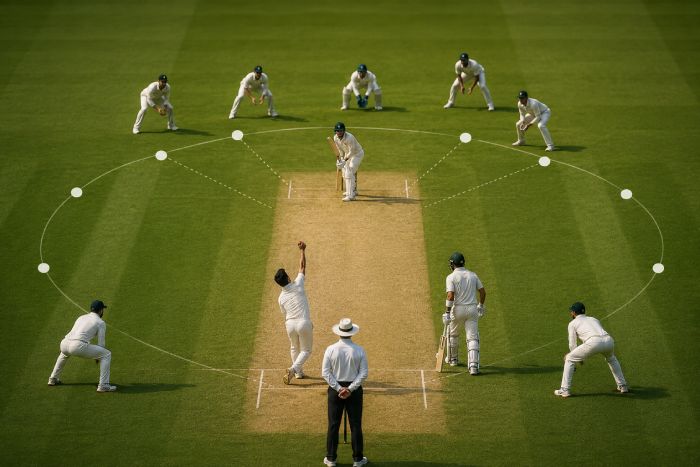
Complete Guide to Attacking & Defensive Spin Field Settings
Spin bowling is often called the art of cricket. While variations, flight, drift, and turn are important, even the best spinner can struggle without the right field placements.
One lesson every experienced spinner learns is this: wickets are often created by field settings as much as by the delivery itself.
Many young spinners focus only on spinning the ball. However, professional spinners know that setting traps, building pressure, and forcing mistakes are what truly win matches.
In this guide, we’ll explore the best field placements for spin bowlers, when to use them, and how successful captains and bowlers use field settings to take wickets in Test cricket, ODI cricket, T20 cricket, and club matches.
Why Field Placement Matters for Spin Bowlers
Unlike fast bowlers who often rely on pace and bounce, spinners rely on:
- Flight
- Drift
- Turn
- Deception
- Pressure
A good field placement helps:
- Create catching opportunities
- Stop easy singles
- Force risky shots
- Build scoreboard pressure
- Support the bowler’s game plan
A spinner with the right field can often dismiss a batter even without turning the ball sharply.
Quick Overview: Best Field Placements for Spin Bowlers
| Field Position | Purpose |
|---|---|
| Slip | Catches edges from turning ball |
| Leg Slip | Catches glance or leg-side edges |
| Short Leg | Close-in catch from bat-pad |
| Silly Point | Bat-pad catches against spin |
| Forward Short Leg | Pressure on defensive batters |
| Cover | Prevents easy drives |
| Mid-Off | Stops straight drives |
| Mid-On | Controls on-side drives |
| Deep Midwicket | Boundary protection |
| Long-On | Catching big hits |
| Long-Off | Catching lofted drives |
| Deep Square Leg | Controls sweep shots |
Understanding Attacking vs Defensive Fields
Before setting a field, a spinner must decide:
Am I trying to take wickets?
Or
Am I trying to stop runs?
The answer determines the field.
Attacking Field
- More close catchers
- Used with new batters
- Common in Test cricket
Defensive Field
- More boundary riders
- Used against set batters
- Common in ODI and T20 cricket
The best spinners know when to switch between both.
Best Attacking Field Placement for Spin Bowlers
When a new batter arrives, this is usually the time to attack.
Typical Attacking Spin Field
| Position |
|---|
| Slip |
| Short Leg |
| Silly Point |
| Mid-Off |
| Mid-On |
| Cover |
| Square Leg |
| Fine Leg |
| Deep Midwicket |
| Bowler |
Why It Works
The batter is still adjusting.
A turning ball can create:
- Inside edges
- Outside edges
- Bat-pad catches
This setup creates multiple wicket-taking opportunities.
The Importance of Short Leg
Ask any experienced spinner and they’ll tell you:
Short Leg wins matches.
Many spin wickets come from:
- Bat-pad catches
- Defensive prods
- Sharp turn
A good short-leg fielder can completely change a game.
Best Situations for Short Leg
- Turning pitches
- New batter
- Defensive player
- Test cricket
Why Slip Is Crucial for Spinners
Many captains remove slips too early.
However, slips remain valuable when:
- Ball is spinning sharply
- Batter is playing away from the body
- Pitch offers bounce
Ideal for:
- Off-spinners to right-handers
- Left-arm spinners to right-handers
- Leg-spinners turning ball away
Best Field Placement for Off-Spinners
An off-spinner bowling to a right-handed batter often aims to create bat-pad catches.
Recommended Field
| Position |
|---|
| Slip |
| Short Leg |
| Mid-Wicket |
| Mid-On |
| Mid-Off |
| Cover |
| Square Leg |
| Fine Leg |
| Long-On |
| Bowler |
Main Dismissals
- Bat-pad catch
- Slip catch
- Stumping
- Mis-hit lofted shot
Best Field Placement for Leg-Spinners
Leg-spinners attack differently.
The ball often spins away from right-handers.
Recommended Field
| Position |
|---|
| Slip |
| Point |
| Cover |
| Mid-Off |
| Mid-On |
| Deep Midwicket |
| Long-On |
| Square Leg |
| Fine Leg |
| Bowler |
Main Dismissals
- Edge to slip
- Catch at deep midwicket
- Stumping
- Mis-hit slog sweep
Best T20 Field Placement for Spin Bowlers
T20 cricket requires balance.
You still want wickets, but boundaries must be protected.
Effective T20 Spin Field
| Position |
|---|
| Point |
| Cover |
| Extra Cover |
| Long-Off |
| Long-On |
| Deep Midwicket |
| Deep Square Leg |
| Fine Leg |
| Mid-Wicket |
| Bowler |
Objective
- Force singles
- Protect boundaries
- Create pressure
Most T20 wickets come from frustration rather than excessive turn.
Best ODI Field Placement for Spin Bowlers
ODI cricket sits between Test and T20 cricket.
During the Middle Overs
Many teams use:
- Slip (occasionally)
- Point
- Cover
- Mid-Off
- Mid-On
- Deep Midwicket
- Long-On
- Long-Off
- Deep Square Leg
This field balances run prevention and wicket-taking opportunities.
How Great Spinners Set Traps
Elite spinners don’t just bowl.
They plan dismissals.
Example Trap
- Allow singles to cover
- Bowl wider line
- Encourage lofted drive
- Place long-off strategically
The batter thinks scoring is easy.
The spinner knows exactly where the catch will go.
Common Field Placement Mistakes
1. Removing Catchers Too Early
Many captains get defensive after a few boundaries.
Sometimes, one extra over with a slip can produce a wicket.
2. Ignoring Batter Strengths
Not all batters play spin the same way.
Some prefer:
- Sweeps
- Reverse sweeps
- Lofted drives
Field settings should adapt accordingly.
3. Copying Professional Fields Blindly
International players face different conditions.
Your field should suit:
- Pitch conditions
- Batter skill level
- Ground size
- Match format
Field Placement Based on Pitch Conditions
1. Turning Pitch
Use:
- Slip
- Short Leg
- Silly Point
Attack aggressively.
2. Flat Pitch
Use:
- Cover
- Long-Off
- Long-On
- Deep Midwicket
Focus on pressure.
3. Dusty Pitch
Keep close catchers active.
Many dismissals come from bat-pad chances.
Pro Tips for Young Spin Bowlers
1. Bowl to Your Field
Never set a field and bowl somewhere else.
Your field and bowling plan must work together.
2. Watch the Batter
Notice:
- Favorite shots
- Footwork
- Sweep tendency
Adjust accordingly.
3. Communicate With Your Captain
The best spin partnerships happen when bowler and captain think alike.
Frequently Asked Questions
Q1. What is the most important fielding position for spin bowlers?
Short Leg is often the most important attacking position because many spin wickets come from bat-pad catches.
Q.2 Should spin bowlers always have a slip?
Not always. A slip is most useful when the ball is turning or bouncing enough to produce edges.
Q.3 What is the best T20 field for spin bowling?
A balanced setup with Long-On, Long-Off, Deep Midwicket, and Deep Square Leg is commonly effective.
Q4. Which field position catches the most spin bowling chances?
Short Leg, Slip, Silly Point, and Deep Midwicket are among the most productive wicket-taking positions.
Conclusion
The best field placements for spin bowlers depend on the batter, pitch, match situation, and format. However, one principle remains constant:
Great spin bowling is about creating pressure and setting traps, not just turning the ball.
A spinner who understands field placement can take wickets even on pitches offering little turn. Learn to think like a captain, bowl to a plan, and use your fielders as part of your strategy.
That’s when spin bowling becomes truly dangerous.
Leave a Reply