Cricket is called a gentleman’s game. In Cricket, batting, bowling & fielding are equally important. Many fast bowlers in the world are famous for their bowling speed. There are several ways to measure your bowling speed.
However, before deciding how to calculate bowling speed, we need to dive into the basics of measuring speed. You can measure your bowling speed by using a stopwatch to calculate the time required for the ball to reach a batsman and within 22 yards of the pitch.
Then, divide the distance by time and convert miles per hour or miles per hour. Alternatively, you can use a speed song. This article discusses the three primary easy and professional techniques to calculate bowling speed in cricket.
Step by Step way to Test the Speed of the Bowling
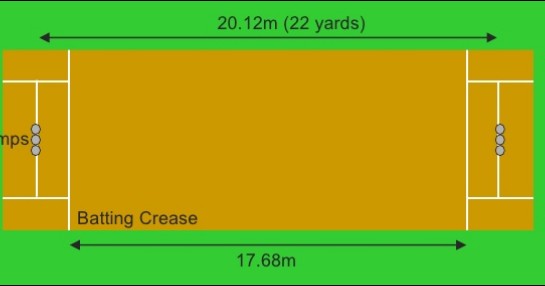
The length of the stump from a cricket pitch stump is 22 yards or 20.12 meters. So, if it takes only 0.5 seconds for the ball to move from one end to another, the ball travels 40 meters per second. Once it converts miles per hour, it will be the same as 90mph, which is the top bowlers’ speed in this sport.
1. Using a Stopwatch – Easy Method

A relatively inexpensive and easy way to measure your bowling speed is to ask a friend to use a stopwatch to see how long it takes for the ball to pass from your hand to the other end of the wicket. Most of us have a built-in stopwatch on our phones.
However, if you have to get a specific speed, it is recommended to buy a professional-grade stopwatch. These are usually cheaper to buy. The place where the bowler drops the ball is about one meter away from the stumps. Therefore, you should accurately measure the distances involved before making any calculations.
Once you have your data, you will be able to calculate your speed with relative ease. So, the initial equation to remember is SPEED = DISTANCE / TIME. To get the most accurate results using this method, make sure the person working on the stopwatch has hand-eye coordination and reflection.
2. Speed Gun Method
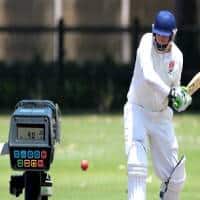
On a professional basis, speed guns are usually located high above the sightscreen. However, you can easily set these up at ground level and achieve the same results. They work by transmitting a sound wave, and when the ball passes through this wave, it is reflected backward and is detected by the gun.
These instruments travel strictly between a ball bowler and a stump. And you don’t need to calculate any math like the previous Stopwatch method.
3. Using Hawk-Eye Method
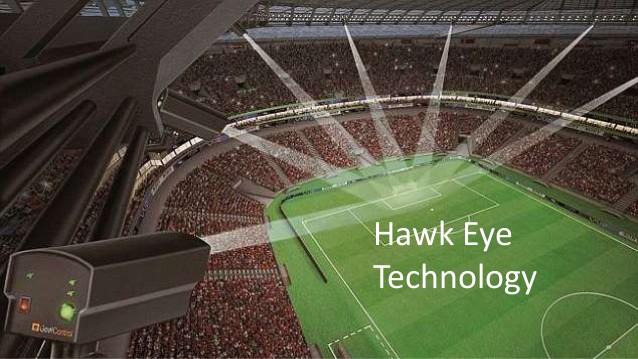
The technology is used in many sports other than cricket, including golf, tennis, and football. However, it was explicitly developed only for cricket by Dr. Paul Hawkins – who at one time realized that he was not as good at cricket as mathematics, so he kept his ambition to play a professional game.
Hawk-Eye is used for measuring the speed at which the ball is bowled. This technology uses six or seven cameras to get ball speed data. Since then, the ball counts the data to track the path until the ball stops. Hawkeye was initially launched to add value to TV analysis. It was first tested in coverage of the Test between England and Pakistan at Lord’s. It quickly became an essential tool for commentators and soon began to explore its use to enforce ICC rules and run the game more accurately.

Good