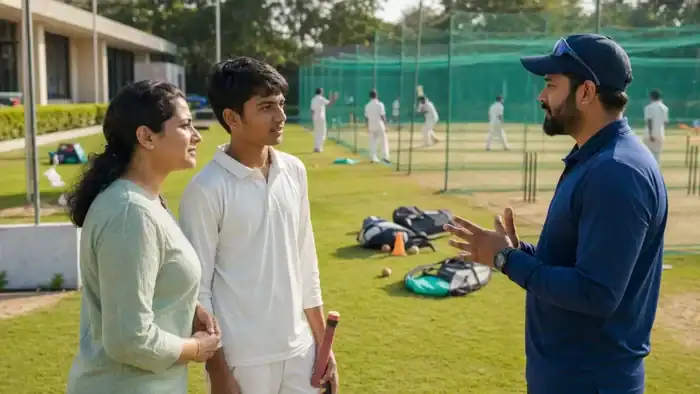
A famous academy name does not guarantee that every player receives useful coaching. The best choice is the programme that matches the player’s age, current level, location, schedule and need for feedback.
Use our list of cricket academies in India for discovery, then use this checklist before paying a long-term fee.
1. Start with the Player’s Actual Goal
A nine-year-old learning basic movement needs a different environment from a 17-year-old preparing for competitive trials. Write the next six-month goal:
- learn safe fundamentals
- join school or club cricket
- improve a specialist role
- prepare for district or state selection
- return after a break or injury
2. Ask Who Will Coach the Normal Session
Academies may advertise a well-known head coach while most sessions are delivered by assistants. Ask for the name, qualifications and experience of the coach who will work with the player each week.
Useful questions include:
- How many players does one coach supervise?
- How is feedback recorded?
- How are young fast bowlers’ workloads managed?
- Who handles strength, conditioning and injury concerns?
3. Observe a Real Session
A trial or observation reveals more than a brochure. Look for purposeful activity. Players should not spend most of the session waiting in one long line.
Notice whether coaches explain why a correction matters, adapt drills to player level and speak respectfully after mistakes.
4. Inspect Facilities for Function & Safety
- nets and run-off areas in usable condition
- safe separation between active lanes
- appropriate lighting for evening sessions
- access to turf or surfaces relevant to the player’s cricket
- first-aid arrangements and emergency contact process
- drinking water, shade and weather plan
More nets are not automatically better if too many players share each lane.
5. Understand the Competition Pathway
Ask how players move from training into matches. Does the academy run internal games, enter leagues or connect players with recognised clubs? No academy can honestly guarantee selection. Be cautious when selection claims are used as a sales promise.
6. Compare the Real Cost
| Cost | Question to ask |
|---|---|
| Registration | Is it refundable after a trial? |
| Monthly/term fee | How many coached sessions are guaranteed? |
| Matches | Are ground, umpire and travel charges separate? |
| Kit | Must equipment be purchased through the academy? |
| Specialist coaching | Is wicketkeeping, pace or strength work extra? |
Calculate cost per attended coached session, not only the advertised annual fee.
7. Review Communication & Safeguarding
Parents should know who supervises minors, how attendance is tracked and how concerns are reported. Photography, transport and one-to-one communication should follow clear policies.
Red Flags
- guaranteed district, state or professional selection
- pressure to pay a large non-refundable fee before a trial
- no clear answer about the regular coach
- unsafe player numbers in a net
- young fast bowlers encouraged to bowl through pain
- public humiliation used as “tough coaching”
- testimonials that cannot be verified
A Simple Academy Scorecard
Score each area from 1 to 5: coaching attention, safety, facilities, match opportunity, communication, travel practicality and cost transparency. Give coaching and safety double weight.
Make the Final Decision After a Trial
Ask the player what they learned, not only whether they enjoyed the session. A good academy should be able to identify one current strength, one development need and a realistic plan. Choose the environment where consistent learning is most likely, not the one making the biggest promise.

Leave a Reply