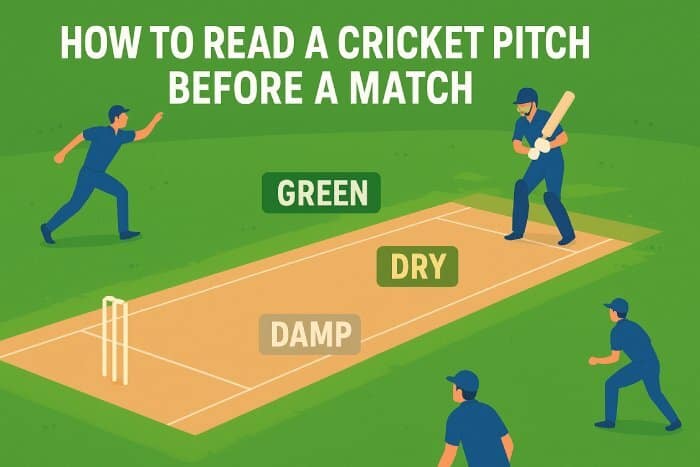
In cricket, every match begins long before the first ball is bowled – it starts with reading the pitch! A pitch can decide whether the game will be high-scoring, bowler-dominated, or a perfect balance between bat and ball. If you understand the pitch well, you can choose the right strategy, playing XI, and even the ideal captaincy decisions in fantasy cricket.
Here’s How to Read a Cricket Pitch Before a Match Like a Pro:
1. Look at the Colour of the Pitch
| Pitch Colour | What It Means | Advantage |
|---|---|---|
| Brown/Light | Hard and dry surface | Friendly for fast bowlers with bounce |
| Green | Extra grass | Seam bowlers get movement |
| Dark/Cracked | Spin bowlers dominate later in the match | Spin bowlers dominate later in match |
2. Check the Grass Coverage
- More grass – Seam, swing & early movement
- Less grass – Easier for batsmen to play strokes
- Bare patches – Spinners get grip as the game progresses
Green = Bowl first
Dry = Bat first
3. Feel the Hardness of the Pitch
Coaches tap the pitch with keys or knuckles:
- Very hard pitch – Fast bounce and pace
- Soft pitch – Ball slows down and grips more
Hard wicket – Good for batting
Soft wicket – Spinners and cutters become effective
4. Observe Moisture and Damp Spots
Cool morning or undercover? Watch out!
- Moisture – Ball swings more initially
- Bowling first becomes a smart option
As the sun rises → moisture dries → batting gets easier
5. Weather Matters – A LOT!
| Weather | Effect |
|---|---|
| Cloudy/Humid | Extra swing for pacers |
| Hot & Sunny | Pitch cracks – spinners rule |
| Dew in evening | Dew in the evening |
6. Format Changes Everything!
- T20 – Fresh surface supports fast runs; captains prefer chasing
- ODI – Mixed behaviour; dew factor matters
- Test – Pitch changes drastically across 5 days (fast bowlers Day 1, spinners Day 4-5)
Quick Pitch Reading Checklist
| Condition | Who Benefits |
|---|---|
| Grass | Seamers |
| Dry Cracks | Spinners |
| Hard Surface | Fast bowlers & stroke-play |
| Damp | Swingers |
| Even Bounce | Strong batting |
Final Strategy Tips
- If there’s grass – Bowl first
- If pitch is dry & flat – Bat first
- Always combine pitch + weather to decide tactics
- If spin is expected later – Pick an extra spinner
Conclusion
Reading a pitch is a skill – the more you observe, the better decisions you can make. From team selection to cricket toss decisions, pitch knowledge can fully change the game!

Leave a Reply