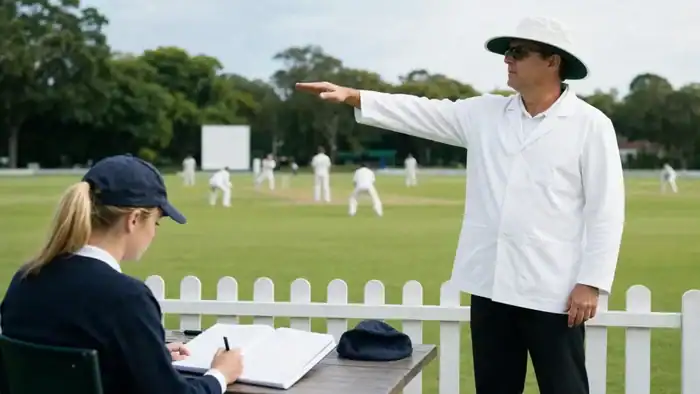
Memorising a picture of an umpire with two arms raised is easy. Recognising the correct signal while a match is moving, and recording it correctly as a scorer, is harder. This practice guide turns the signals into short match situations.
For the complete visual reference, first read our cricket umpire hand signals guide. The official authority is MCC Law 2.13.
Quick Revision Chart
| Decision | Umpire action | Scorer records |
|---|---|---|
| No ball | One arm extended horizontally | No-ball extra plus completed runs as applicable |
| Wide | Both arms extended horizontally | Wide extra plus additional wides completed |
| Out | Index finger raised above the head | Wicket, dismissal type and relevant players |
| Dead ball | Wrists crossed and re-crossed below the waist | No delivery outcome unless another law requires it |
| Boundary four | One arm waved side to side across the chest | Four runs to the appropriate total |
| Boundary six | Both arms raised above the head | Six runs |
| Bye | Open hand raised above the head | Bye extras |
| Leg bye | Hand touches a raised knee | Leg-bye extras |
| Short run | Bent arm raised; fingers touch the nearer shoulder | Deduct the short run as directed |
| New ball | Ball held above the head | Note the new ball in the score record |
Match-situation Quiz
Question 1
The bowler oversteps. The batter drives the delivery to the boundary. Which signal comes first?
Answer
The umpire calls and signals no ball while the ball is in play, then signals the boundary to the scorers once the ball is dead. Signals should be acknowledged separately.
Question 2
The ball passes outside the batter’s reach without touching the bat or body. The wicketkeeper misses it and the batters complete two runs. What must the scorer wait for?
Answer
Wait for the wide signal and any communication about the total wides. The scorer should not assume every delivery outside off stump is legally a wide; the umpire decides.
Question 3
A delivery touches the batter’s pad, no shot is attempted, and the batters run. Can the scorer record leg byes immediately?
Answer
No. Leg byes depend on the conditions in Law 23. The scorer follows the umpire’s signal rather than guessing from the ball’s path.
Question 4
The ball reaches the rope after a fielder slides into it. The striker and non-striker have crossed. What signal resolves the score?
Answer
The boundary-four signal. The scorer records the boundary outcome under the applicable scoring law.
Question 5
One batter fails to make good the ground while completing a second run. Which signal should the scorer expect?
Answer
Short run. If more than one run is short, the bowler’s-end umpire informs the scorers of the number to record.
A 15-minute Scorer Practice
- Ask a partner to read ten match situations in random order.
- Write the expected signal before seeing the answer.
- Record the outcome on a blank score sheet.
- Check the answer against the Laws, not a social-media graphic.
- Repeat only the situations you missed.
Common Learning Mistakes
Confusing a call with a signal: some decisions involve a verbal call during play and a visual signal to scorers after the ball becomes dead.
Watching only the ball: scorers must watch the umpire after each delivery and acknowledge signals individually.
Using an old chart: rules and playing conditions can change. Confirm instructional material against the current MCC Laws and the competition’s playing conditions.
How to Use this Article in a Club
Print the table for a scorer workshop, but keep the official Laws open during discussion. Give learners a short match video with the scoreboard hidden and ask them to record one over. The useful skill is not naming a gesture; it is connecting the decision, the signal and the score.
Primary reference: MCC, Law 2 — The Umpires.

Leave a Reply