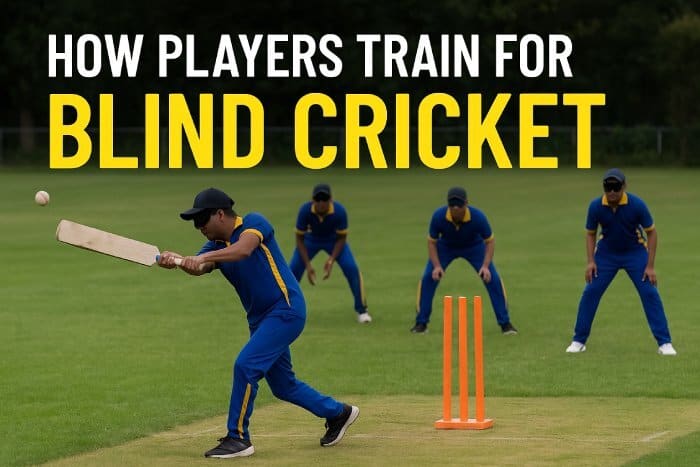
Blind Cricket, also known as visually impaired cricket, is an inspiring adaptation of the traditional game that allows players with visual impairments to compete with passion and precision. Behind every powerful shot and strategic move lies intense training, specialized techniques, and customized fitness routines. Let’s explore how these exceptional athletes train to perform at their best.
1. Understanding the Foundation of Blind Cricket Training
Training for blind cricket focuses on building awareness through sound, touch, and movement rather than sight. Since players rely on their other senses, the training emphasizes:
- Sound-based coordination – Tracking the ball by hearing the sound of its rattle.
- Spatial awareness – Learning to understand distances, angles, and directions.
- Team communication – Calling out clearly and responding to teammates’ voices during play.
The goal is to create muscle memory and confidence so players can react instinctively on the field.
2. Training Techniques Used by Blind Cricketers
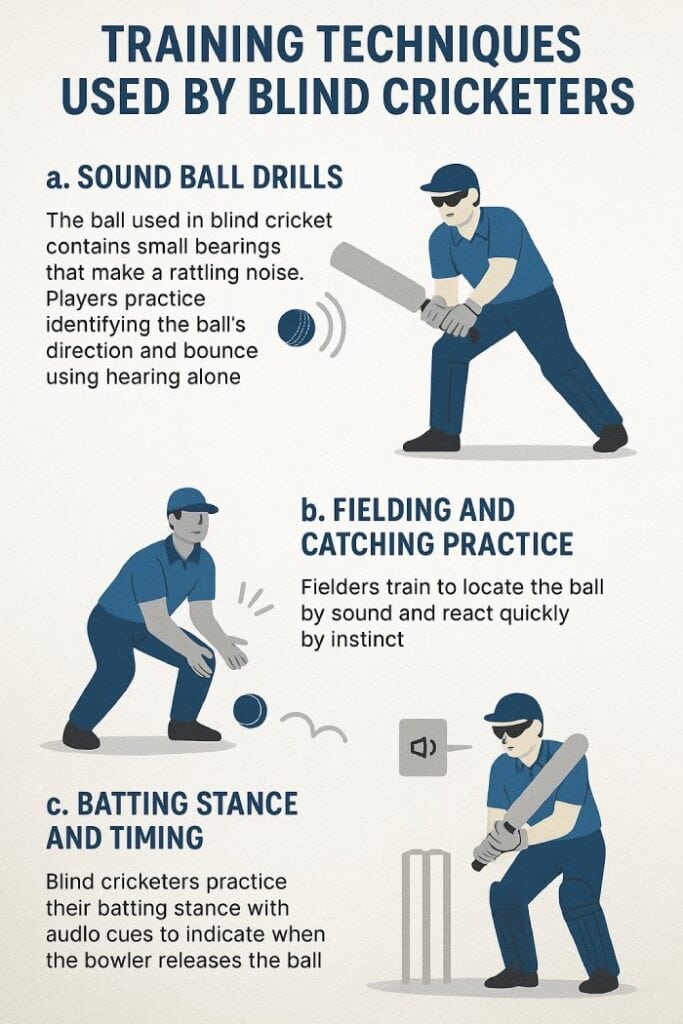
a. Sound Ball Drills
The ball used in blind cricket contains small bearings that make a rattling noise. Players practice identifying the ball’s direction and bounce using hearing alone.
- Bowling drills focus on delivering the ball with a consistent sound pattern.
- Batting drills train players to time their shots based on sound rather than sight.
b. Fielding and Catching Practice
Fielders train to locate the ball by sound and react quickly by instinct. Common methods include:
- Rolling or bouncing the ball from various angles.
- Practicing under the guidance of a coach who gives verbal cues.
- Repetition to improve reaction time and anticipation.
c. Batting Stance and Timing
Blind cricketers practice their batting stance with:
- Audio cues to indicate when the bowler releases the ball.
- Consistent rhythm drills to improve swing timing.
- Lightweight bats initially, then regulation bats for match-level power.
3. Tools and Equipment Used in Blind Cricket Training
Blind Cricket uses specialised gear designed for safety and performance:
- Sound Balls: Balls filled with metal bearings that make a continuous sound when moving.
- Guided Wickets: Stumps may have attached sound cues or bright contrast for partially sighted players.
- Audio Signals: Coaches often use claps, voice commands, or whistles for direction during practice.
- Protective Gear: Players wear pads, gloves, and helmets designed for comfort and protection during high-speed play.
These tools make it easier for players to adapt training to match real-game conditions.
4. Fitness & Conditioning for Blind Cricketers
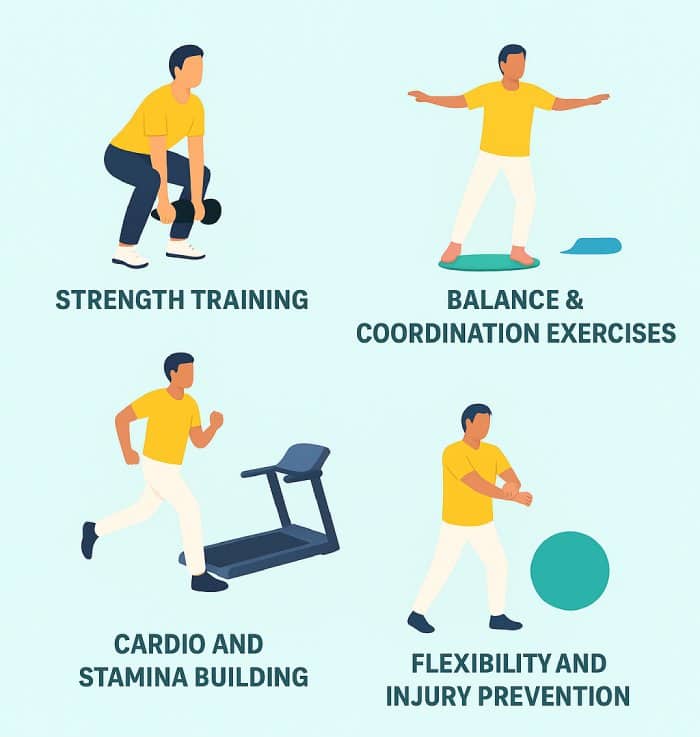
Fitness plays a major role in improving mobility, endurance, and balance. Here’s how players stay in peak condition:
a. Strength Training
Exercises like squats, lunges, and push-ups help improve overall body strength, especially for bowling and batting.
b. Balance & Coordination Exercises
Activities like balance board training or guided yoga help enhance stability and body control — crucial for fielding and running between wickets.
c. Cardio and Stamina Building
Running with guides, treadmill sessions with sound support, and stationary cycling help players maintain top stamina for longer matches.
d. Flexibility and Injury Prevention
Stretching and physiotherapy routines are key for preventing injuries and improving movement fluidity.
5. The Role of Coaches and Technology
Coaches play an essential role by offering audio-based guidance, tactile demonstrations, and positive reinforcement. Some advanced training setups even use:
- Sound sensors to analyze ball movement.
- Voice-enabled AI tools for personalized feedback.
- 3D field audio mapping to simulate match conditions.
This combination of human coaching and smart technology ensures players continue to push the boundaries of the sport.
6. Mental Conditioning and Team Spirit
Blind Cricket players also undergo mental training to build focus, confidence, and teamwork. Techniques include:
- Visualization through sound and touch, where players imagine the field layout.
- Motivational sessions to build confidence before big matches.
- Team-building exercises that improve trust and communication between players.
Conclusion
Training for Blind Cricket is about more than fitness or skill – it’s about redefining limits. These athletes train with immense determination, mastering the game through sound, awareness, and teamwork.
Every rattle of the ball, every shout of a teammate, and every confident swing reflects years of discipline and practice.
Blind Cricket isn’t just a version of the game – it’s a celebration of human resilience, adaptability, and spirit.
Also Read –

Leave a Reply