
Science in cricket is important because Cricket is a heavily data-driven sport. By understanding the Science behind the game, cricket players and coaches can make more informed decisions that can help improve performance.
While the science of cricket is complex, a few key concepts are important to understand. These include the role of statistics in Cricket, the biomechanics of Cricket etc.
In this blog, we will explore these concepts in greater detail to help you better understand the science of cricket.
Scientific Principles of Cricket
The days are gone when cricket was only played as a ‘gentlemen’s game‘. It is now much more than that and can be described as a blend of Science, art and popularity in itself. From making cricket bats to playing in one-day internationals, science has affected every aspect. So let us see the various scientific principles of cricket.
1. Role of Statistics in Cricket –

The game of Cricket, like any other sport, has been an amateur activity, and efforts were made to track the progress through statistics. The role that stats play in every other sport is huge; it helps in improving performance, tracking patterns and also helps in making the right calls.
Statistics has always played a huge role in the game. However, in recent years, experts have realized that by using statistics effectively, they can be better. This article aims to not just look at the role statistics has played in the sport throughout history but how it is being applied today. We must begin to understand cricket statistics before our favourite sport becomes a distant memory for us all.
2. Biomechanics of Cricket –
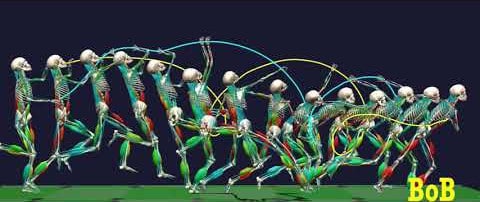
Cricket is everyone’s favourite sport. While it is extremely aesthetic, there is something more to it that goes beyond the eye. There are certain rules and laws which govern the game of cricket. Science has also had its say on Cricket through biomechanics and related studies, which have made substantial contributions to help understand the game better.
3. Science Behind Cricket bat and ball –
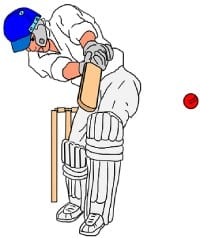
If we look at the history of cricket, we will find that bats and balls were invented long ago. This is needed in cricket to play it properly. Bat’s core purpose is to hit the ball in the direction you want. On the other hand, the ball’s design purpose is to improve its bounce off the surface.
- A bat is a handy tool that’s been used for decades. It helps you hit the ball in whichever direction you want.
- On the other hand, the ball offers different bounce-off surfaces as part of its design.

4. Science Behind the Bouncer Ball –
When does a short ball cease to be a bouncer and become a beamer?
Did you know – the velocity of the ball plays a role in the height of its bounce? These are interesting and unusual insights from Science behind cricket.
5. Swing Bowling in Cricket –
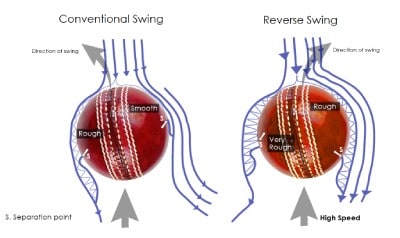
Swing bowling is a type of bowling in cricket that involves swinging the ball through the air to create an aerodynamic force on the ball. This force can cause the ball to deviate from its original path, making it difficult for batsmen to hit the ball. Swing bowlers use this to their advantage, as it can help them to get batsmen out.
Swing bowling is considered to be one of the most difficult types of bowling to master. It requires great skill and practice to be able to swing the ball consistently. Swing bowlers need to understand the game of cricket and the techniques used by batsmen. They also need to bowl at various speeds and generate movement both in the air and off the pitch.
6. How do Cricket Balls go from Red to White when Worn out?
As a cricket ball is used, the red leather finish wears away, and the ball changes colour. This is because the pigments in the leather react with the oxygen in the air, causing them to fade. The process is accelerated by the friction between the ball and the ground, as well as the sweaty hands of the cricketers.
Over time, the red colour will fade to orange, yellow and eventually white. The process is not instantaneous; it can take several matches for a cricket ball to lose its red colour completely.
Conclusion
In this article, we discuss the science of cricket. It is important because cricket is a heavily data-driven sport. By understanding the science behind the game, cricket players and coaches can make more informed decisions that can help improve performance. This article aims to not just look at the role statistics has played in the sport throughout history but how it is being applied today.
Stay tuned with us for more interesting cricket information. Also, subscribe to our YouTube channel for daily cricket updates.

Leave a Reply