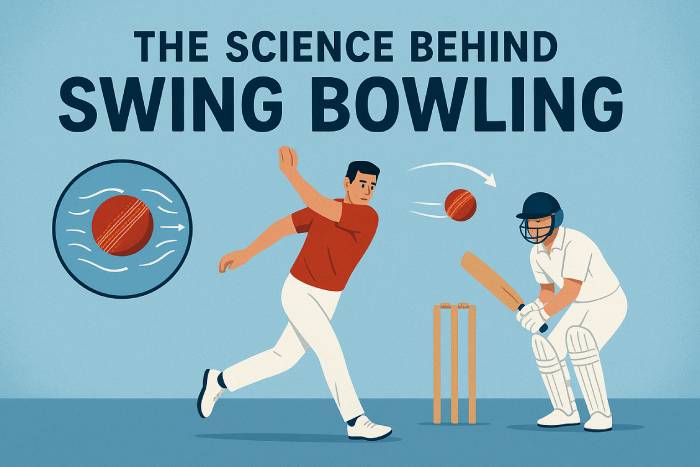
In cricket, swing bowling is often called the “dark art” – mysterious to some, but devastating in the hands of a skilled bowler. When done right, it can make even world-class batters look uncomfortable. But swing is not magic. It’s science – a fascinating mix of aerodynamics, seam position, ball condition, and skill.
In this post, we’ll break down the mechanics of swing bowling, the factors that influence it, and how players can maximize swing potential.
1. What is Swing Bowling?
Swing bowling is a technique where the cricket ball moves sideways in the air before pitching. This movement can be away from the batter (outswing) or into the batter (inswing), making shot selection and timing much harder.
Unlike spin bowling, which relies on revolutions off the pitch, swing bowling exploits airflow and pressure differences around the ball while it’s in flight.
2. The Physics of Swing
To understand swing, we need to look at Bernoulli’s Principle and aerodynamic drag.
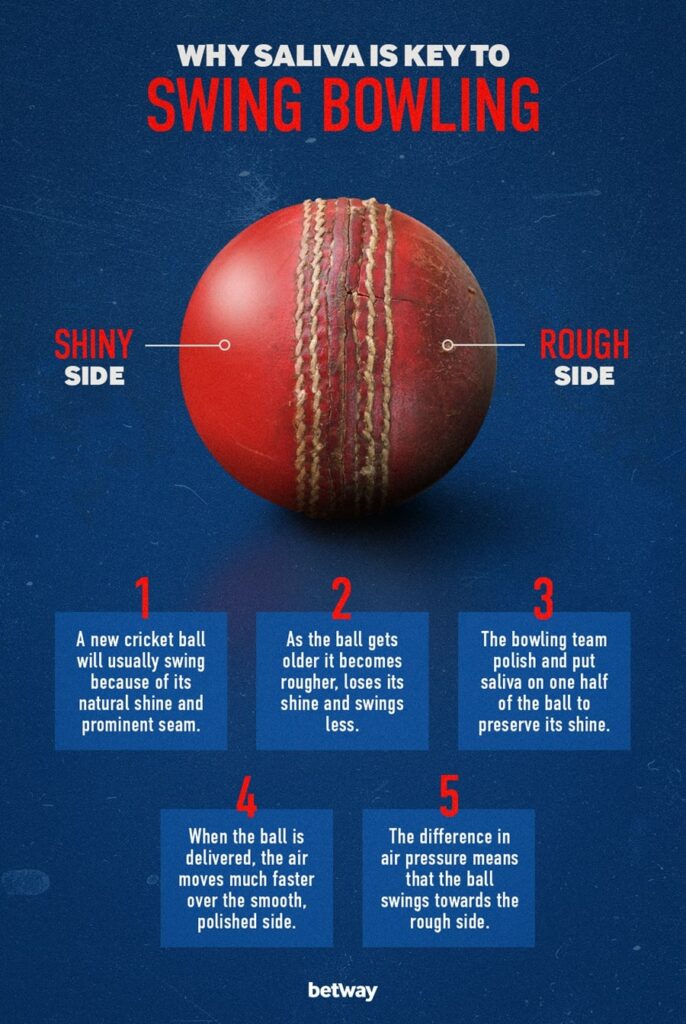
- The Ball’s Asymmetry – A cricket ball has a shiny side and a rough side. By maintaining one side smooth and letting the other get worn, bowlers create an uneven airflow.
- Seam Position – The upright seam guides air over one side differently than the other.
- Air Pressure Difference – The rough side creates turbulence, slowing the airflow, while the smooth side keeps air moving faster. This difference in speed and pressure causes the ball to drift towards the rough side.
3. Types of Swing
a) Conventional Swing
Occurs when the ball is relatively new and both sides are in decent condition.
- Outswing – Shiny side on the off-side, seam angled towards slips.
- Inswing – Shiny side on the leg-side, seam angled towards fine leg.
b) Reverse Swing
Happens when the ball is older (35+ overs), with one side heavily worn. Airflow behaves differently, and the ball swings towards the shiny side at higher speeds.
c) Contrast Swing
Seen in certain conditions where both sides have different textures, but the seam remains upright, producing unpredictable movement.
4. Factors Influencing Swing
- Ball Condition – The art of shining the ball on one side is critical.
- Bowling Speed – Conventional swing works best at medium-fast speeds (120–135 km/h), while reverse swing thrives above 140 km/h.
- Weather & Humidity – Cloudy, humid conditions enhance swing as moisture in the air increases movement.
- Pitch Type – Green pitches with grass help preserve the ball’s shine and seam position.
5. Tips for Bowlers to Master Swing
- Perfect Your Seam Position – Keep it upright and steady.
- Control Your Wrist – Wrist alignment is key for consistent direction.
- Work on Ball Maintenance – Know the rules, but protect the shiny side.
- Adapt to Conditions – If swing isn’t working, switch lengths or try cross-seam deliveries to change the ball’s wear pattern.
6. Famous Swing Bowlers
Legends like Wasim Akram, James Anderson, and Dale Steyn have made careers out of swing mastery. Studying their techniques through slow-motion videos can help aspiring bowlers understand the finer points.
7. The Batter’s Perspective
Facing swing requires late judgment and soft hands. Many batters fall because they commit too early – a split-second delay in stroke decision can mean the difference between a cover drive and a thin edge to slip.
Final Thoughts
Swing bowling is as much about patience and setup as it is about science in cricket. By understanding how airflow, seam position, and conditions interact, bowlers can transform a simple cricket ball into a weapon of deception. For batters, recognizing swing early is a skill that comes only through practice and experience.
Swing may look like magic to spectators, but on the field, it’s pure physics in cricket – mastered through years of practice.

Leave a Reply